Becoming a Good Enough Designer
Moving beyond a design school mentality

Design School as imagined by Gemini’s Nano Banana
I was recently revisiting my portfolio as my design education comes closer to fruition, all the while realizing that it doesn’t (and hopefully never will) feel complete. I am starting to plan my next steps and am struggling to come up with a neat, clear headline to replace “Product Design Student” on my LinkedIn profile.
I turned to Claude AI in my desperation to understand what label might be appropriate, however, through our conversation I learned that the most meaningful space to operate is where a label doesn’t exist. Perhaps this grey space is where I belong, at the intersection of (speculative and/or transition) designer, sense maker, futurist, and many more existing roles.
Despite being a “trained” designer, I feel like I do not fit the bill. In my portfolio, I prefer to show what is missing from my projects rather than elaborate on what I was able to accomplish. I even lead it all off with a section outlining my tenets of design:
To honour the natural tendency towards continuous variation
To respect the interconnectedness of and uncertainty of complex systems
To appreciate the learning opportunity in all that we experience
Obviously, this is not the profile of someone who wants to only design consumer products for a living.
Then I had the realization, again from discussing with Claude, that I am missing a key tenet on this list – actually creating and presenting something tangible.
If I am going to design anything, I have to put it out into the world for others to be able to experience in order to have any real conversations. The pile at home is growing much larger with imperfect products and unfinished prototypes.
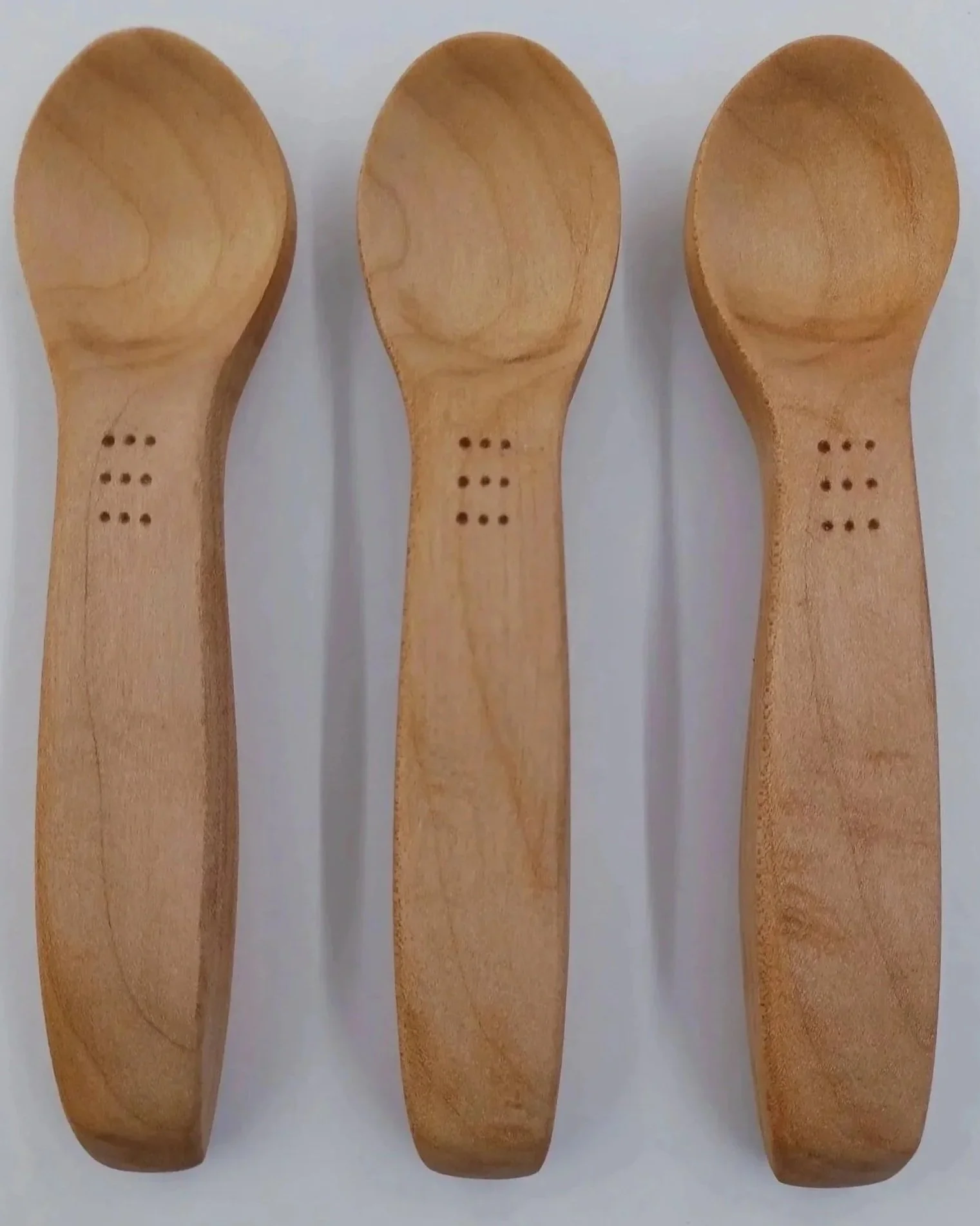
First-year product design challenge of making three identical spoons using only power tools (except finishing)
This is where Claude made a really interesting point to me, in that “good enough” is in fact necessary in design. If we wait and deliberate on if something is ready to be put out there, then we will never make any progress.
I have always believed in the power of design to change the world. However, as Claude explained it, “the perfect artefact that never gets made has zero impact.”
I do want to raise a counterpoint in that balance is needed. It is also important, nay imperative, that we designers think about what effects this may have on the world, including people, other living things, and the environment as a whole.
Maybe the proper phrasing isn’t “is it good enough to launch” but “is it good enough to launch from?” A design is truly never finished in that it can always be improved upon. We, or at least I, need to come to terms with the notion that imperfect is really valuable.
In fact, imperfect may be the best kind of design because it teaches us how to do better in the next round.